
Right hand or left hand bow? Your dominant eye decides
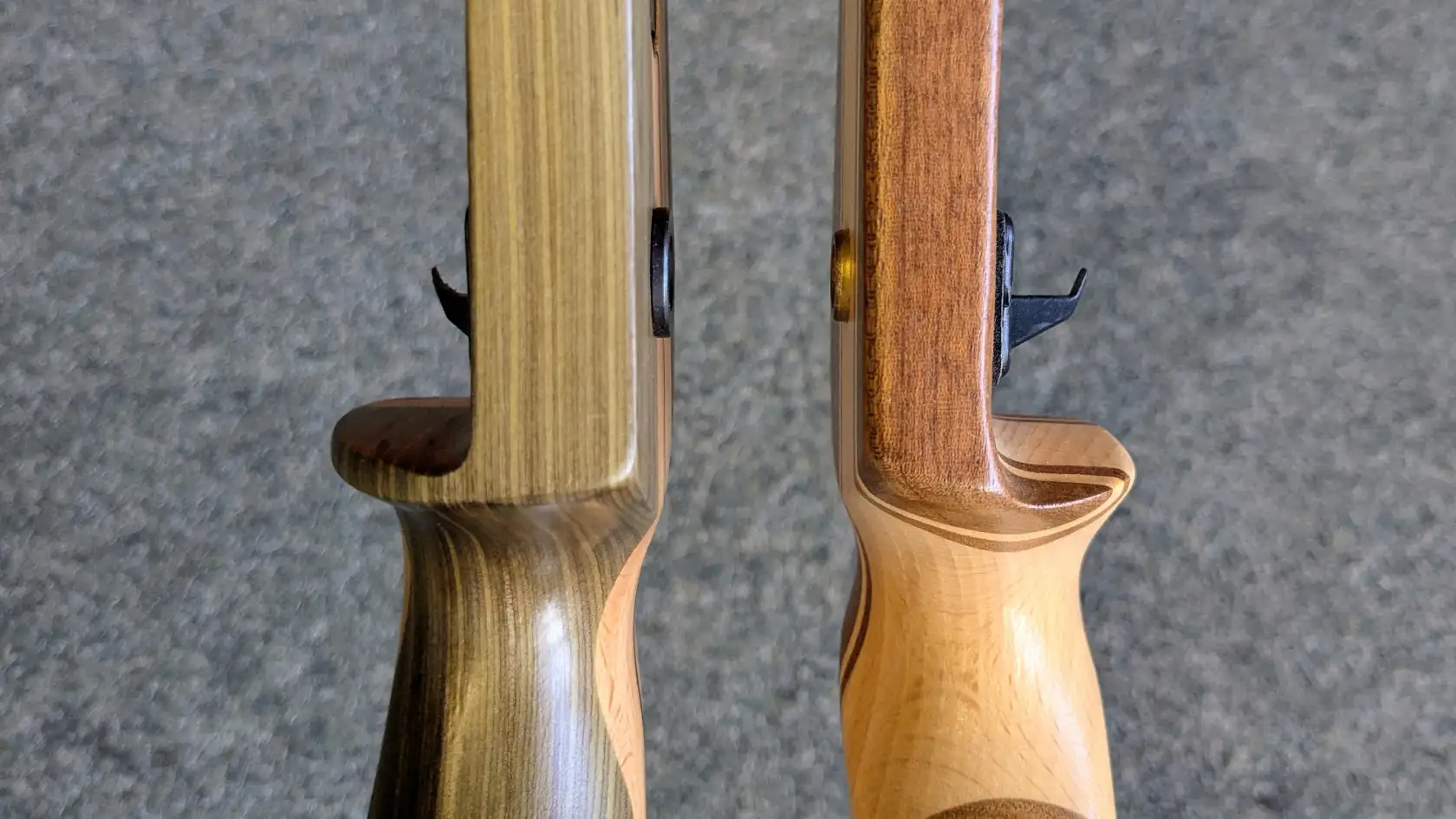
Right hand or left hand bow, what the label actually means
The label follows the drawing hand, not the hand that holds the bow. So a right hand bow sits in your left hand while your right hand draws the string. A left hand bow works the other way round. Shops shorten this to RH and LH in the product name, and this is where beginners get it wrong most often.
The visible difference sits on the riser. The sight window, meaning the cut out above the grip, is on the left side of a right hand bow as you look at it in shooting position. That is where the arrow sits and where your right eye has a clear line to the target. On a left hand bow the cut out is on the right.
| Feature | Right hand bow (RH) | Left hand bow (LH) |
|---|---|---|
| Bow hand, holds the bow | left | right |
| Drawing hand, pulls the string | right | left |
| Sight window, seen from the archer | cut on the left | cut on the rifght |
| Eye that aims | right eye | left eye |
| Suits | a dominant right eye | a dominant left eye |

Why your dominant eye decides and your writing hand does not
Both eyes deliver an image, but one of them leads. That eye, often called the master eye in archery, takes visual charge and sets where you aim. In archery, it has to be positioned directly above the arrow. Otherwise, you'll miss the target.
This shows up most clearly in traditional shooting, where you keep both eyes open and work without a sight. The arrow itself is your aiming reference there. See it with the wrong eye and you see it at an angle, so the shot lands off to the side even though your form and your release were clean.
The second half of the answer surprises most people. Archery is not an everyday movement. Unlike writing or throwing, there is no trained pattern to build on, so you learn stance, draw, anchor and release from scratch either way. A right handed person who shoots left from the very first session is at no motor skill disadvantage. That is simply how they learn it. For the same reason the eye test comes first, ahead of the question of which side feels more familiar.
How to find your dominant eye for archery in one minute
Both tests work because you do not steer them consciously. Follow the steps and do not think about which eye ought to win.
- The paper test: Cut a hole of about one inch (2 cm) in the middle of a sheet of paper, A4 or letter size, whatever you have. Hold the sheet out at arm length, pick a fixed target with both eyes open and frame it in the hole. Now bring the sheet slowly towards your face without losing the target. The hole ends up in front of your dominant eye.
- The hand gap test: Same thing without paper. Overlap your hands so a small gap stays between your thumbs and palms, frame a target through the gap and bring your hands to your face. The opening lands in front of your leading eye on its own.
Run each test two or three times. If the same eye comes up twice, you have your answer. If the result flips or the opening ends up between your eyes, your dominance is not pronounced, and the section on what to do about it covers you.
Cross dominance: right handed with a dominant left eye
Cross dominance means your dominant hand and your dominant eye sit on opposite sides. Right handed with a dominant left eye is the most common version. It is not a defect, it is a normal variation, and in archery it belongs to the things worth sorting out at the start.
If that archer draws a right hand bow, the left eye looks across the arrow at an angle. The result is a lateral offset that grows with distance and does not train away, because it comes from the line of sight rather than from technique.
With a sight you can tune a consistent offset out at one distance. It gets restless as soon as both eyes stay open, because the dominant eye then supplies a second image that your aim drifts towards without you noticing. That second image is why cross dominance mostly shows up as spread rather than as a constant error you could simply dial out.
What to do about cross dominance
Two routes work here, and which one fits depends on how you shoot. Then there is the special case where neither eye clearly wins.
Traditional and instinctive, both eyes open
Here the eye leads, so the bow hand follows it. A right handed archer with a dominant left eye picks up a left hand bow. Since you are learning the whole movement from scratch anyway, this costs you very little at the start and saves you the switch later on.
With a sight, on a recurve or a compound
If you want to stay on the side you are used to, you switch the dominant eye off. Three ways do that, namely squinting it shut, wearing an eye patch, or fitting a blinder to a cap or your glasses so one eye loses its view of the target. Squinting is the simplest and also the most tiring, because the muscles around the eye tense up. Patches and blinders are common on sighted equipment and do not wear you out.
When neither eye clearly leads
Some archers have weak dominance or it shifts on them. A blinder is the calmest answer there, because it removes the second image your aim cannot choose between. The question of retraining the eye comes up almost every time at this point. Eye dominance does not retrain like a muscle, so the workable route runs the other way. You decide which eye aims and you take the view away from the other one.
Which gear is side specific
The decision reaches further than the riser. Five parts only exist for one side, three fit either.
| Part | Side specific | Reason |
|---|---|---|
| Riser | yes | sight window and grip are built for one side |
| Arrow rest | yes | sits on the sight window side |
| Finger protection, tab or glove | yes | cut anatomically for the drawing hand |
| Quiver | yes | carrying side and draw direction follow the drawing hand |
| Release | yes | trigger and wrist strap are handed |
| Limbs | no | they fit risers of either orientation |
| String | no | runs down the centre with no side reference |
| Nocking point | no | sits on the string and applies to both sides |
Two special cases are worth knowing. Some nock types and some vane types are direction bound, because they spin the arrow a certain way or need a set orientation on the string. So with arrow components it pays to read the product details instead of ordering by feel.
Switching hands later on and what it really costs
Switching is possible and it is unpleasant. After a few months the sequence lives in your fine motor memory, and on the other side you start over on stance, anchor and release. That is frustrating. Some archers stop at this point, when the orientation was the issue rather than any lack of talent.
Then there is the equipment, because you need the riser and the arrow rest from the table again, and the quiver depending on the model. Together those two things are why the eye test belongs before the purchase and not in your third session.
From test result to the right bow
Once the side is settled, the field gets a lot smaller. The right hand bows and the left hand bows show you what is available in your orientation, and the full bows overview lets you work by bow type on top of that.
Two decisions follow right after. Which bow length suits your height is covered in its own guide, and if you would rather be walked through the whole setup, the bow finder asks for your measurements step by step. This guide settles the side, those settle the dimensions.
A word to finish on
Run the paper test once before you order a bow. If your drawing hand and your eye dominance agree, take the orientation you expected. If it turns out to be cross dominance, the eye has priority, so you either switch to the opposite hand or cover the dominant eye with a blinder. If you are still unsure, get in touch with us and we will walk through the test with you before you order anything.
FAQs
Left hand or right hand bow, which one do I need?
Your dominant eye decides, not your writing hand. If your right eye is dominant, a right hand bow fits, which you hold in your left hand and draw with your right. With a dominant left eye it is the other way round. The paper test gives you the answer in under a minute.
I am right handed but my left eye is dominant. Which bow should I get?
In traditional shooting, where you keep both eyes open and work without a sight, you follow the eye and take a left hand bow. On a sighted recurve or a compound you can stay on the right and cover the left eye with a patch or a blinder. Because archery is not an everyday movement, learning it with the unfamiliar hand puts you at no motor skill disadvantage.
How can I tell if a bow is built for right or left hand?
Look at which side the sight window is cut on and where the arrow rest sits. On a right hand bow both are on the right as you look at the bow in shooting position, on a left hand bow they are on the left. Shops usually put RH or LH in the product name.
Can you train your dominant eye to switch?
Eye dominance does not retrain like a muscle. The usual route runs the other way, you take the dominant eye out of the aiming picture with an eye patch or a blinder on a cap or your glasses. Squinting works too, but it tires you and tenses the muscles around the eye.
What if neither eye is clearly dominant?
Run both tests two or three times. If the result stays unclear or keeps flipping, shoot on the side of your drawing hand and cover one eye with a patch or a blinder. That stops the double image and gives your aim a fixed reference.
Do I need to replace my gear if I switch hands?
Less than most people think. You need a new riser and a new arrow rest, and the quiver depending on the model. Finger protection, release, limbs, strings and nocking points are universal. With nocks and vanes it pays to read the product details, because individual types are direction bound.