
Finding the Right Draw Weight
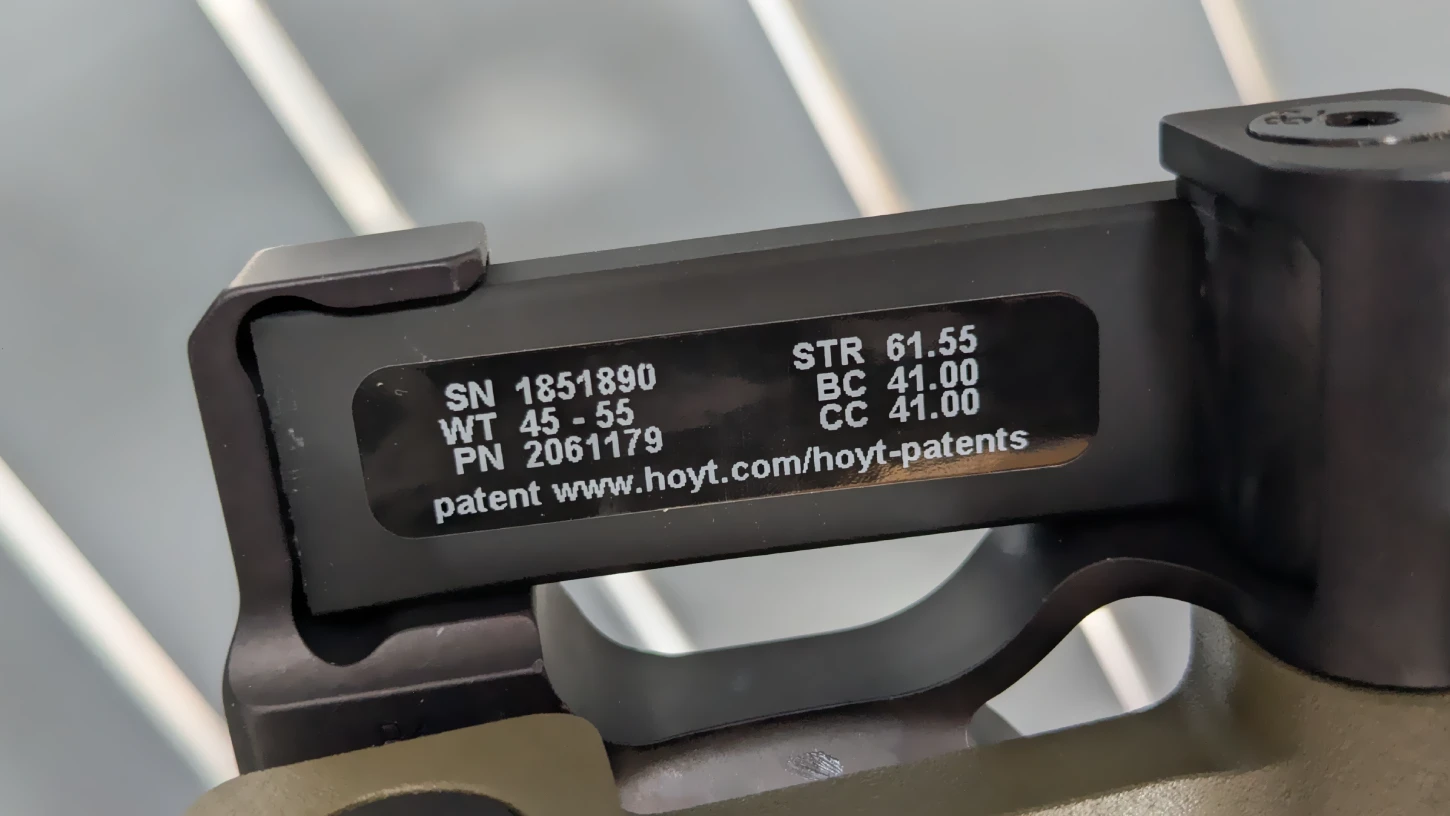
What draw weight describes
The unit is the pound, because archery took its measurements from the English speaking world. One pound is roughly 0.45 kg, so a 20 lbs bow asks for about 9 kg of pull, held with your back and shoulder blades rather than your arm.
| Draw weight | Roughly equal to |
|---|---|
| 16 lbs | 7.3 kg |
| 20 lbs | 9.1 kg |
| 24 lbs | 10.9 kg |
| 30 lbs | 13.6 kg |
| 40 lbs | 18.1 kg |
| 50 lbs | 22.7 kg |
| 60 lbs | 27.2 kg |
Comparing this to lifting a dumbbell still misleads. In archery the force is held statically for seconds at a time, and you repeat it fifty to a hundred times in one session. What counts is not what you manage once but what you manage thirty times without shaking.

Where draw weight is marked and how to read it
You will find the marking on the lower limb, usually on the side or on the face pointing towards you. A typical entry reads 68" / 24# @28". The hash symbol stands for pounds, and the figure after the at sign is the part that matters, because it names the draw length the value applies to.
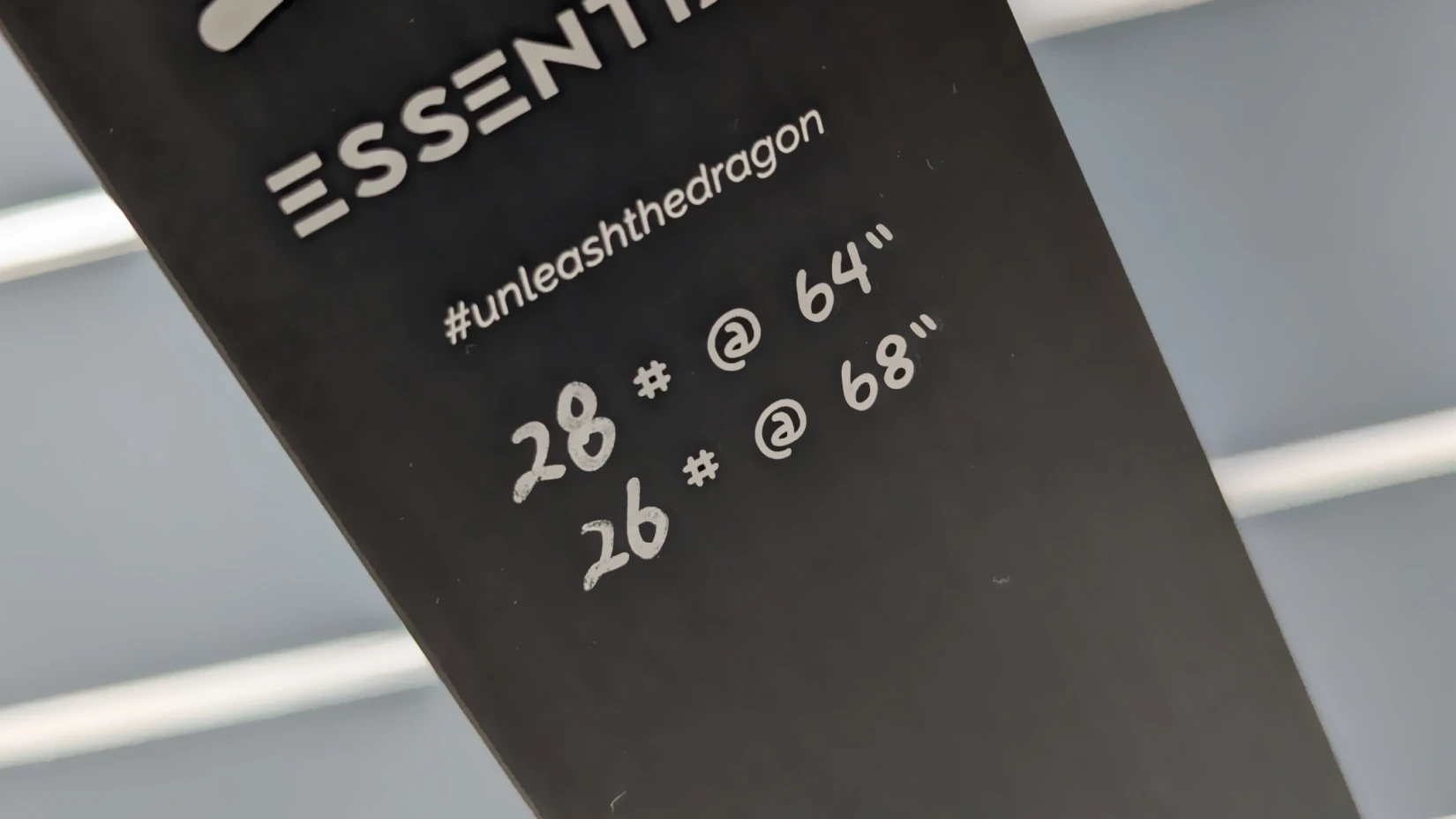
That 28 inch reference comes from the AMO standard, now maintained by the Archery Trade Association. Draw further and the real weight rises, draw shorter and it falls, by 1 to 2 lbs per inch depending on limb material. At a 26 inch draw, a limb marked 24 lbs puts about 20 lbs on your fingers. At 30 inches it is closer to 28 lbs. Arrow selection depends on that real figure rather than the printed one, which is why a spine calculator asks for your draw length.
Take-down bows often carry two values. The reason lies in the ILF system, since the same limbs fit risers of different lengths. On a shorter riser, usually 21 inches, you get a shorter bow and a higher draw weight, on a 25 inch riser a longer bow and a lower one. The limb cannot know which you will use, so it states both. Which bow length results from that combination is covered in our guide to bow length.
Draw weight for your first bow
One rule covers the first bow. Lighter beats heavier. A bow that feels almost too light in the first weeks is exactly right, because it lets you work on posture, anchor and release rather than on surviving the shot. Shaking after twenty arrows costs you technique, and poor technique outlasts sore muscles.
| Archer | Recurve, starting out | Compound, peak weight |
|---|---|---|
| Children, 8 to 12 years | 10 to 16 lbs | 15 to 25 lbs |
| Teenagers, 13 to 17 years | 16 to 20 lbs | 25 to 35 lbs |
| Adult women | 16 to 24 lbs | 25 to 35 lbs |
| Adult men | 20 to 26 lbs | 35 to 45 lbs |
The compound column reads differently. It shows peak weight, the highest force during the draw cycle. Let-off drops the holding weight at full draw by 65 to 85 percent, so at 40 lbs peak and 80 percent let-off you hold only around 8 lbs. Getting there still takes the full force, and that is where beginners who judge by the holding weight come unstuck.
On a longbow, pick the lower end of the range, because draw weight climbs disproportionately over the last few centimetres. That stacking belongs to the design and cannot be trained away.
Two tests you can run yourself
No table replaces drawing the bow. Both tests need nothing but a bow and a minute.
- Hold for 30 seconds. Come to full draw and hold it for half a minute without shaking and without losing your form. If that stays calm, the weight fits. If you break early or your shoulder creeps up, it is too high.
- Fred Asbell floor test. For traditional and instinctive archers. Bend forward, aim the bow at the ground and draw. The draw should come easily. If you have to fight it, the bow is too heavy for repeatable shooting.
The reverse case exists too. Too light shows up when your sight runs out of adjustment, when arrows drop off on the last few metres to the target, or when you regularly pull past your anchor point.
Signs of too much weight are shaking after only a few arrows, accuracy fading through a session, technique faults that were not there before, and pain in shoulder, elbow or forearm that lingers on rest days. Take the last one seriously, because tendons and ligaments recover far more slowly than muscle.
What the discipline asks for
For recreational archers, draw weight is an individual call. In competition and in international bowhunting the requirements narrow the range, because distance, arrow weight and speed are linked.
| Setting | Common draw weight | Reason |
|---|---|---|
| Olympic recurve, men | 42 to 44 lbs | distances up to 70 m (77 yards) and heavier aluminium carbon arrows need speed |
| Compound, competition | 50 to 60 lbs peak, women sometimes above 40 lbs | let-off makes high figures steady to hold, and the cam system tolerates light arrows |
| Longbow classes shooting wooden arrows | sometimes above 50 lbs | wooden shafts are heavy by nature and need energy for a flat trajectory |
| Bowhunting, international | high, subject to national rules | penetration is the requirement, so heavy arrows at high speed |
| 3D and field, traditional recurve | 30 to 35 lbs carries many setups | short to medium distances with modern lightweight arrows |
The Olympic discipline has one quirk that rarely gets explained. The sight limits you downwards. If the arrow flies too slowly, the sight would have to sit so low that the arrow strikes it on release. Draw weight there follows the equipment rather than ambition.
Figures for competition classes and for hunting come from federation rule books and from practice, and they differ by country, class and season. Anyone shooting under World Archery rules or hunting abroad checks the current rule book rather than a table online.
Why modern arrows need less draw weight
The numbers in older guides come from an era of different materials. An aluminium shaft at a comparable spine weighed around 313 grain, a current carbon shaft comes in near 250 grain. That is close to 30 percent less mass for the same energy to move.
The consequence is simple. The arrow speed that once took a heavy bow now comes from a lighter one. For target shooting at 18 or 20 m (20 or 22 yards) and for 3D courses, 30 to 35 lbs delivers what used to need considerably more. The often quoted 40 pounds and above is not a benchmark for those uses, it is a leftover from older equipment.
None of this argues against heavy bows, only against unnecessary ones. Less draw weight on good equipment spares your shoulder and elbow, and for most archers it produces calmer shots, because strength stops being the limiting factor.
Your bow's comfort zone
Every bow has a range where it works efficiently without straining the material. On most recurves that sits between 230 and 250 fps, roughly 230 to 240 km/h (145 to 150 mph). Inside that window, draw weight, arrow weight and speed are in balance.
Pushing past it usually happens one way, and it ends badly. The archer drops arrow weight below the minimum the manufacturer states. An arrow that is too light cannot absorb enough energy, so the rest stays in the bow and works against the limbs. That means vibration, hand shock and, over time, material damage. A common rule of thumb puts the minimum at about 5 grain of arrow weight per pound of draw weight, but the manufacturer's figure is the binding one.
In practice, extra speed comes from draw weight and arrow tuning, not from a lighter shaft.
Measuring your real draw weight
A bow scale hooked into the string gives the most accurate figure, showing the highest force as you draw. Measure at your own draw length rather than at 28 inches, since that is the value arrow selection depends on. Many clubs and pro shops measure free of charge, often together with draw length.
On a compound, draw weight is set through the limb bolts. Fully seated means maximum weight, backing them out reduces it. Respect the maximum number of turns given in the data sheet, because beyond that the bolt loses preload.
Moving up without hurting yourself
After a few months of training, an increase is normal. The proven ceiling is 2 lbs per month, followed by 2 to 4 weeks at the new level before going further. Tendons and ligaments adapt more slowly than muscle, and jumping from 20 to 35 lbs inside three months invites an overuse injury that costs months.
On a take-down bow with an ILF fitting you only swap the limbs, and a pair runs from 150 to 300 euros depending on quality. That is exactly why a three piece bow is the relaxed choice for a first setup, and you will find matching options in our bows category and among the recurve limbs. One piece bows and compounds with a fixed range leave you replacing the whole bow.
If the warning signs from the section on tests appear, drop back 3 to 5 lbs. That is not a defeat, it is the faster route.
Conclusion
Measure your real draw weight at your own draw, aim for the lower end of the table and run the 30 second hold before you buy. For most adult beginners on a recurve that means 20 to 26 lbs for men and 16 to 24 lbs for women, and for sport setups on a 3D course 30 to 35 lbs with modern carbon arrows goes further than the old figures suggest. If you are torn between two weights, take the lighter one and budget for the next set of limbs from the start.
FAQs
How much draw weight should a beginner use?
On a recurve, 20 to 26 lbs for adult men and 16 to 24 lbs for women, with 16 to 20 lbs for teenagers. On a compound, peak weight for a beginner sits at 35 to 45 lbs for men and 25 to 35 lbs for women. When in doubt take the lower figure, because technique only develops without a strength battle.
How many kilograms is 30 lbs of draw weight?
About 13.6 kg, since one pound is roughly 0.45 kg. 20 lbs works out at about 9.1 kg and 40 lbs at about 18.1 kg. The dumbbell comparison still misleads, because the force is held statically and repeated fifty to a hundred times per session.
What does 24# @28" on the limb mean?
24 pounds of draw weight at a draw length of 28 inches. The hash symbol stands for pounds and the figure after the at sign gives the reference draw under the AMO standard. Drawing shorter or longer shifts the real weight by 1 to 2 lbs per inch.
How quickly can I increase draw weight?
By no more than 2 lbs per month, then hold the new level for 2 to 4 weeks. Tendons and ligaments need longer than muscle. Pain in the shoulder or elbow on rest days is the signal to drop back 3 to 5 lbs.
Do I really need 40 lbs or more?
For target shooting and 3D courses, usually not. Modern carbon arrows weigh around 220 grain at a comparable spine against 313 grain for older aluminium shafts, so you reach the same speed with less draw weight. 30 to 35 lbs carries many traditional setups. High figures stay necessary where the discipline demands them, such as compound competition or wooden arrows in longbow classes.
What is peak weight on a compound bow?
The highest force during the draw cycle. Let-off drops the holding weight at full draw by 65 to 85 percent, so at 40 lbs peak and 80 percent let-off you hold around 8 lbs. You still have to manage the pull up to peak cleanly.
How much draw weight do I have on my fingers?
As a rule, the draw weight of your bow is measured at a draw length of 28 inches. If your draw length differs from the standard, this also changes the draw weight exerted on your fingers. If you draw further, the actual draw weight increases. If you draw less, it decreases by 1 to 2 lbs per inch. For example, if you draw a limb labelled 24 lbs with a draw length of 26 inches, the actual weight on your fingers is around 20 lbs. With a draw length of 30 inches, it is around 28 lbs.