Want to get started in archery without the frustration, unexpected extra purchases, or the nagging feeling that you chose the wrong bow? We put five of the most popular beginner bows to the test, combining hands-on experience, an honest beginner’s perspective, and expert knowledge. From build quality to upgrade potential, we looked at what really matters. What were we looking for? A bow that doesn’t hold you back, but grows with you. From your very first shot to the next level.
Published: ·By Moritz
What’s important to us in a bow
Archery combines focus, physical activity, and mental relaxation. Yet many beginners run into problems because they choose the wrong setup: missing accessories, poor build quality, or no room for upgrades. The result? Frustration instead of progress. In this guide, we take a closer look at five beginner bows that stood out in our hands-on test. All models were tested under real-world conditions, at different distances and by archers with varying levels of experience.
We focused on three key factors that matter most to beginners:
Forgiveness and shooting performance: How well does the bow support the learning process? Does it remain stable even when technique or form isn’t quite perfect yet?
Modularity and upgrade potential: Can the bow evolve as your skills and expectations grow, or will you quickly reach its limits?
Ergonomics and build quality: How does the bow feel in your hand? And how well does it hold up to regular use?
These criteria don’t just highlight the differences between models. They also help show which bow offers long-term confidence, room to grow, and lasting enjoyment on the shooting line or out on the course.
Prices in euros. Shipping costs and import duties vary by country.
1
Best overall
[SPECIAL] SET | DRAKE Recurve Bow - 16-42 lbs - 62-70 Inch - Beginner Bow
Flexible, stable, and thoughtfully designed: a bow that grows with you.
The DRAKE recurve bow set is a well-engineered choice for beginners who are thinking beyond their first few sessions. Variants such as Sepia, Moss, and Alabaster feature metal limb pockets, which have less play than wooden fittings. This improves precision, particularly during repeated shooting sessions.
FastFlight compatibility also helps transfer energy more efficiently, delivering a more direct shooting feel. That makes the set a great option for anyone who wants to get more out of their setup over time. Standardized mounting points for a sight, button, and other accessories make upgrades straightforward, without having to buy a new bow.
Verdict: A bow that doesn’t just suit you today but grows with you.
Pros
Excellent forgiveness and a stable, precise shot
Modular design that grows with your experience
Ergonomic wooden grip for a comfortable feel
Available for right- and left-handed archers
Quiet shot, measuring just 68 dB at a distance of 3 m
Ideal for clubs, 3D courses, and group practice
Cons
A wide range of configuration options can make choosing the right setup more challenging
High-quality, modern, and flexible: for beginners with higher expectations.
The JACKALOPE Zircon is a versatile, technically advanced option for ambitious beginners. Its ILF system, aluminum riser, and precise limb alignment offer a level of equipment that is uncommon in this price range. The bow delivers a stable shooting experience and leaves plenty of room for future upgrades.
One minor drawback: the plastic grip is functional, but doesn’t offer the same warmth and natural feel as a traditional wooden grip. This difference becomes more noticeable during longer shooting sessions.
Pros
Standardized limb attachment system for maximum upgrade flexibility
High-quality aluminum riser for stability and durability
FastFlight-compatible limbs with good recovery
Advanced features, including limb alignment adjustment and a stabilizer mounting point
Cons
Plastic grip feels less natural than wood
No accessories included, so you’ll need to choose them separately
Jackalope Zircon - How to: Barebow
3
DRAKE Gecko RTS - 30-55 lbs - Compound Bow
A compact compound bow for beginners who enjoy a more technical setup.
The DRAKE Gecko is a surprisingly complete compound bow for anyone looking for an alternative to the classic recurve. With adjustable draw weight and draw length, it suits ambitious teenagers and adults alike. Most of the essential accessories are included, from the release aid to the arrow rest.
However, the Gecko has the characteristic look and feel of a compound bow. Its technical styling, steeper learning curve, and lack of a left-handed version are worth considering. If those aren’t deal-breakers, it offers a well-thought-out system for getting started and progressing over time.
Pros
Wide adjustment range of 30 to 55 lbs to accommodate progress
Approximately 70% let-off makes holding at full draw less demanding
Most accessories included, so you can get started almost immediately
Aluminum riser for solid stability
Cons
Available only in a right-handed version
Sporty, tactical styling that won’t appeal to everyone
Compound bows require a greater understanding of the equipment
Stylish and durable: for archers who value quality and individuality.
The Bearpaw Hero stands out with its high-quality finish and stylish design. It’s a good choice for archers who appreciate quality and want a bow with a distinctive look.
However, its higher price and the lack of included accessories make it less appealing as a first bow. Those who want to build their setup piece by piece will find a durable option here, but it isn’t an all-in-one beginner package.
Pros
High-quality appearance and a pleasant grip
Comfortable feel in the hand
Available for right- and left-handed archers
Well suited to 3D archery and style-conscious recreational archers
Cons
No accessories included, so it isn’t ready to shoot straight out of the box
High initial cost
Limited technical flexibility
5
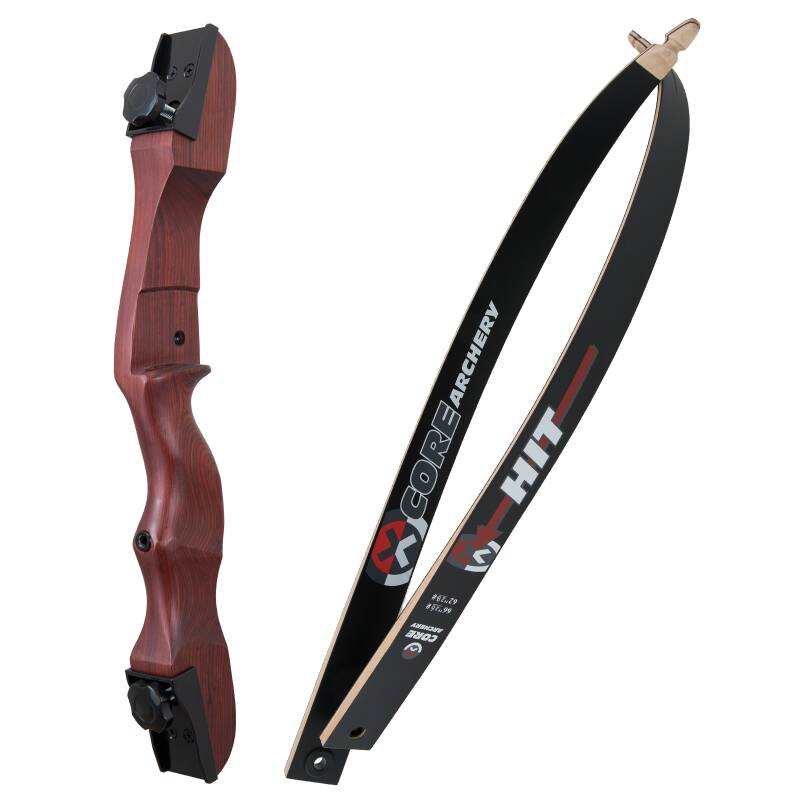
[SPECIAL] CORE Hit - 68 inches - 24 lbs - Take Down Recurve bow | Right hand
An affordable entry point, but with clear limitations.
The CORE Hit is a functional, budget-friendly option for anyone curious about archery and looking to keep initial costs down. However, its limited selection and basic build quality come with clear trade-offs. For those serious about getting into the sport or training regularly over the long term, this bow has its limitations.
Pros
Simple, functional design
Light draw weight, suitable for young archers and beginners
Affordable starting price
Cons
Limited upgrade options
No accessories included, such as arrows or protective gear
Functional but basic construction
3 bow myths that cost you accuracy and fun
Many people pick bows that look good or seem like a bargain, then wonder a few weeks later why their shots aren’t getting any better. Often the problem isn’t you but outdated ideas about materials, accessories, and technique. These are the 3 myths you should know before you buy your first bow.
Myth 1: The string is just an accessory. All that matters is that it holds.
When choosing a bow, many people think about design, draw weight, or price first. The string seems like an afterthought. Yet it has a major influence on how the bow shoots, how fast it is, and the feedback you get in training.
Myth 2: A light bow is always easier to handle.
Beginner bows in particular are often bought by a simple rule of thumb. Light means practical, or heavy means better quality. Both fall short. What many people overlook is that the weight of the riser directly affects your posture and stability while aiming.
Myth 3: Accessories like a sight or plunger are only for pros.
Many people start out bare, without any extra accessories, because they think they should learn the basics first, or that a sight and plunger will only distract them. Yet these tools can help a lot, especially at the start.
The factors that decide a successful start in archery
To avoid a bad buy when choosing a recurve bow, keep 5 key buying criteria in mind. They decide whether your start is motivating, safe, and worthwhile in the long run, or marked by frustrating extra purchases and inaccurate shooting.
1. Beginner-friendly, even without a complete kit
Many recurve bows for beginners come without accessories. That isn’t necessarily a drawback. What matters is that the bow is equipped so you can easily build a working setup around it.
A good beginner model has clear advantages here, such as standard threads for a sight and stabilizer, a compatible string length, and a well-thought-out design that you can assemble even without prior experience. You do have to choose an arm guard, finger tab, or arrows separately, but if the bow itself is right, you can put your setup together sensibly and without stress.
2. Build quality determines safety, durability, and how much frustration you avoid.
When limbs work loose, grip areas splinter, or screws wear out too quickly, training becomes a test of patience. Well-made bows rely on sturdy metal bushings and cleanly bonded limbs.
These features don’t just make a bow last longer. They also give you a safe and stable shooting experience, especially while your draw isn’t fully under control yet.
3. A good bow is “forgiving” and helps you improve faster.
Especially at the start, your draw won’t always be exactly the same. A beginner bow has to cope with that and still deliver calm, repeatable shots.
Bows with good forgiveness even out small inconsistencies, settle quietly after the shot, and give clear feedback. That way you learn faster how your body and the bow work together, and you stay motivated.
So pay attention to things like smoothness, noise, arrow speed, and how well the bow groups.
4. The bow has to feel right in your hand, or your accuracy suffers.
If the bow is too big, too angular, or poorly balanced, your grip tenses up. That costs strength, focus, and accuracy. A well-shaped grip pays off right away, especially in longer sessions or if you have small hands.
Just as important, the bow should be available for right- and left-handed archers and settle naturally as you aim.
5. It’s not just the price that has to be right, but also the service afterwards.
A low price is of little use if you can’t get spare parts later or are left on your own with questions. Beginners in particular benefit from retailers who give advice, ship quickly, and keep spare parts in stock.
The set should also leave room to upgrade later, for example with better limbs, a FastFlight string, or a sight. That keeps you flexible, and you don’t have to buy a whole new setup straight away.
More than a bow: a system that grows with you
If you want to get the most out of archery in the long run, you need more than a good starter set. You need a setup that makes sense. The DRAKE beginner set from BogenSportWelt combines solid initial quality with the freedom to upgrade as your skills develop. Rather than being a bow you quickly outgrow, it’s designed to stay with you as you progress, whether you add carbon arrows, a FastFlight string, or an aluminum riser.
The DRAKE set came out on top across all the key test categories, including build quality, ergonomics, shooting performance, and technical upgrade potential.
What makes the difference? You don’t have to adapt to your bow. Your bow grows with you.
If you want to enjoy archery for years to come, this set offers quality, confidence, and room to develop. But archery is about more than focus and technique. It’s also about sharing the experience. Whether you’re out on a 3D course, shooting at your local club, or spending time with friends, the DRAKE set gets you ready for your next level and new connections along the way.
Best overall: the DRAKE beginner bow
Start archery with confidence and flexibility. The well-thought-out DRAKE system grows with you, from your first shot to advanced training. Which DRAKE is right for you?
When choosing your first bow, one simple rule applies: it’s better to start too light than too heavy. If your bow feels almost too easy to draw during the first few weeks, that’s a good sign. It allows you to focus on your stance, anchor point, and release rather than struggling to hold the bow. If you’re shaking after twenty shots, your technique will suffer, and bad habits can stick around much longer than muscle soreness.
Our recommended draw weights:
Children aged 8 to 12: 10 to 16 lbs
Teenagers aged 13 to 17: 16 to 20 lbs
Adult women: 16 to 24 lbs
Adult men: 20 to 26 lbs
Where am I allowed to practice archery?
Since a bow is classified as sports equipment, shooting on your own property is generally permitted as long as the shooting lane is safe and no arrow can leave your property. For beginners, the range at a local archery club is the safest and most practical option, offering professional guidance and proper infrastructure.
Do I need a right-hand or left-hand bow?
Your dominant eye, rather than your dominant hand, is the key factor when choosing a bow. A right-hand bow is held in the left hand and drawn with the right.
Your dominant eye determines which side you use for aiming. To test your eye dominance, form a small triangle with the thumbs and index fingers of both hands. Look at a target through the triangle, then slowly bring your hands toward your face. The triangle will naturally move toward your dominant eye.
If your eye dominance and hand dominance don’t match, the bow should generally be selected according to your dominant eye. Your drawing hand can be retrained, but your eye dominance cannot.
What types of bows are there, and how do they differ?
The main types of bows are recurve bows, compound bows, longbows, hybrid bows, and horse bows.
Recurve bows: The most versatile and one of the most popular types of bows.
Compound bows: Use a system of cams to create let-off, making it much easier to hold the bow at full draw.
Longbows: The most traditional style, without mechanical aids.
Hybrid bows: Combine the look of a longbow with increased performance.
Horse bows: Short bows designed for instinctive shooting without aiming aids.